
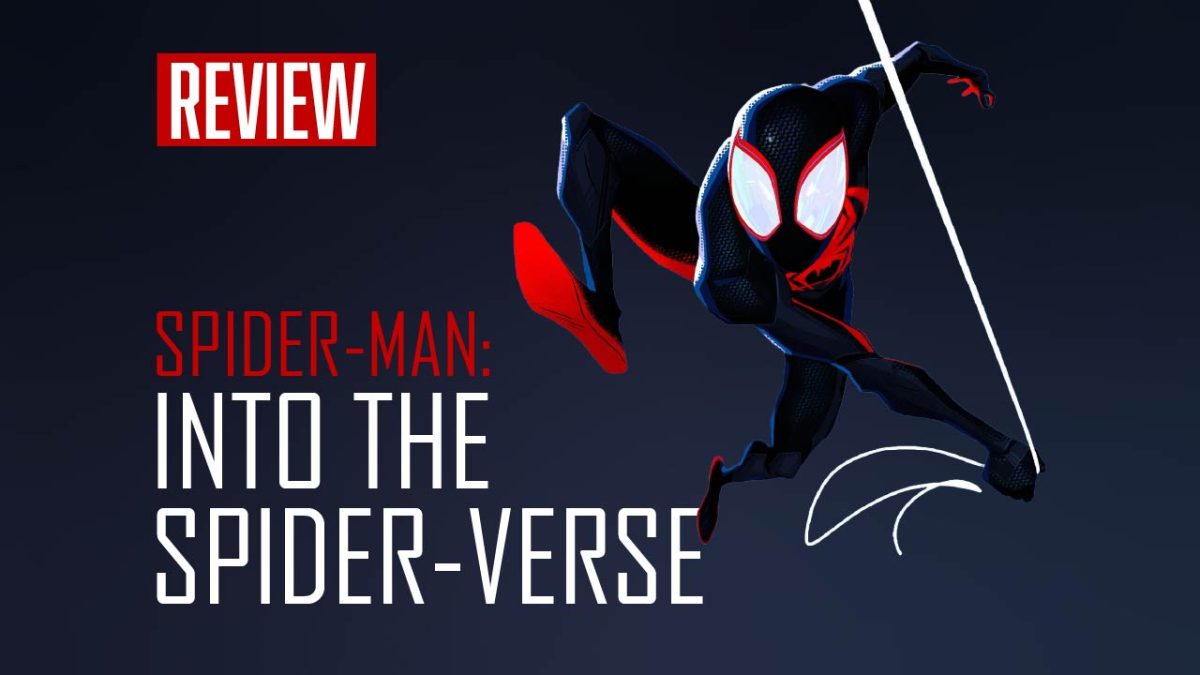
Miles Morales’ has existed in the Marvel Universe since 2011, created by Brian Michael Bendis and Sara Pichelli; despite this, his television and movie appearances were limited to the Ultimate Spider-Man cartoon, when he appeared in the show’s third and fourth season and was voiced by Donald Glover. After that, fans of the character were left with a Spider-Man sized hole in their heart waiting for the character to make his return, but the wait wasn’t long. “Spiderman: Into The Spider-Verse” released on Dec. 14, 2018, and instantly became a hit worldwide, earning over $384 million on a budget of $90 million. Fans and critics praised the movie for its reimagining of animation, amazing soundtrack, storyline and its cultural significance.
Before “Spider-Man: Into the Spider-Verse” was released, 3-D animation had been mainly used by Disney and Pixar, but the way they used it was limited. These studios used the medium in a standardized way, chasing perfection in character designs, aiming to achieve a hyper-realistic look. With the release of the movie, animation fans were shocked. Sony Animation did something that, at that point, had never been done before: blending 3-D and 2-D elements together and focusing less on perfection and more on stylization. With characters having slight imperfections in their design, such as Gwen Stacy’s gap-tooth, Peter B. Parker’s crooked nose, pupils being slightly different sizes; these slight imperfections made the characters feel more real. Alongside these stylistic character design choices, the movie uses uncommon animation techniques other animated movies at the time hadn’t, such as dot-pattern shading and line-art hatching for shadows. The movie reinvented the standard for animation.
The movie not only had beautiful visuals: the soundtrack was so incredible that it was nominated for three Grammys. The soundtrack features original songs like “Sunflower,” by Post Malone and Swae Lee, “Invincible,” by Aminé; and “What’s up Danger,” by Blackway and Black Caviar. Arguably the most important song in the movie, “What’s up Danger” plays when Miles Morales takes the ultimate “Leap of Faith.” Every song in the movie serves as inner dialogue without explicitly stating it. However, using “What’s up Danger” in the “Leap of Faith” scene is so important as it’s a moment that went down in cinematic history for the emotional weight it carried not only for Miles’ character but for the character of Spider-Man as a whole. This is the moment in the movie when Miles finally accepts his role as Spider-Man and no longer sees his powers as a burden but as a responsibility. The song starts slow with the opening verse mixing in with the score before pausing while Miles overlooks the city as he sticks to a skyscraper deciding if he is about to jump. Once he leaps, the lyrics “What’s up Danger,” are heard in the background. As he falls through, the words are repeated until Miles swings for the first time by himself in the movie. While he traverses the city, the song triumphantly plays in the background and concludes as the viewer and Miles realize the gravity of what he just did and what it means. He is Spider-Man.
“Spider-Man: Into the Spider-Verse” also brings back the meaning of being Spider-Man. For years, the character’s journey has been compared to puberty, with the famous radioactive spider bite being the catalyst for this transformation. The movie plays this both literally by having Miles acknowledge that his pants no longer fit and figuratively by the numerous responsibilities that Miles now has. The movie also makes the choice to have Miles react in a more realistic way than the different versions of Peter Parker. In multiple movie and TV show adaptations, the character of Peter Parker welcomes the changes and responsibilities, Miles runs from them. His early reaction and aversion toward the idea that he is Spider-Man is more akin to how many teenagers feel when life starts to feel more real and they have what feels like the weight of the world on their shoulders. Additionally, the movie does a good job of showcasing what that change looks like between different people. The movie includes different Spider-Man variants like Gwen Stacy’s Ghost-Spider, Peni Parker’s SP//dr and Peter B. Parker as the original Spider-Man. Each character feels unique in their journey as a Spider hero, symbolizing different stages of life. Even Peter B. Parker whose character showcases some of the unfortunate realities of being an adult trying to juggle too many responsibilities, like marriage and financial break. While every Spider-Man story is about going through puberty or some life changes, Miles resonated with fans for a bigger reason.
Black and Latino Spider-Man fans, for a long time, couldn’t see themselves in the Spider-Man universe. With Black characters before Miles Morales being far and few between, the most prominent being Hobie Brown’s Prowler, who served as an antagonist to Peter Parker. While Latino comic fans had Miguel O’Hara, who was a prominent comic character upon his release, it would be years before either character saw a theatrical debut. When Miles Morales received his movie adaptation, Black and Latino fans of Spider-Man finally had a front and center Spider-Man that looked like them. After years of spotty representation, there was a character they could relate to in the unique experience of being a person of color and the struggles that come with it. “Spider-Man: Into the Spider-Verse” also opened doors for more main racially diverse Spider-Man variants to be introduced like Hobie Brown’s Spider-Punk, the aforementioned Peni Parker and Cindy Moon to name a few. Without “Spider-Man: Into the Spider-Verse,” these characters would have remained gems that only comic readers would know about.
“Spider-Man: Into the Spider-Verse” was a movie nobody saw coming and a movie that resonated with fans everywhere, not just for the Spider-Man intellectual property but for the stunning visuals, incredible soundtrack, greater themes and cultural impact the movie left. The movie currently has a sequel “Spider-Man: Across the Spider-Verse,” and the final installment in the Spider-Verse saga, “Spider-Man: Beyond the Spider-Verse,” is set to be released June 18, 2027.