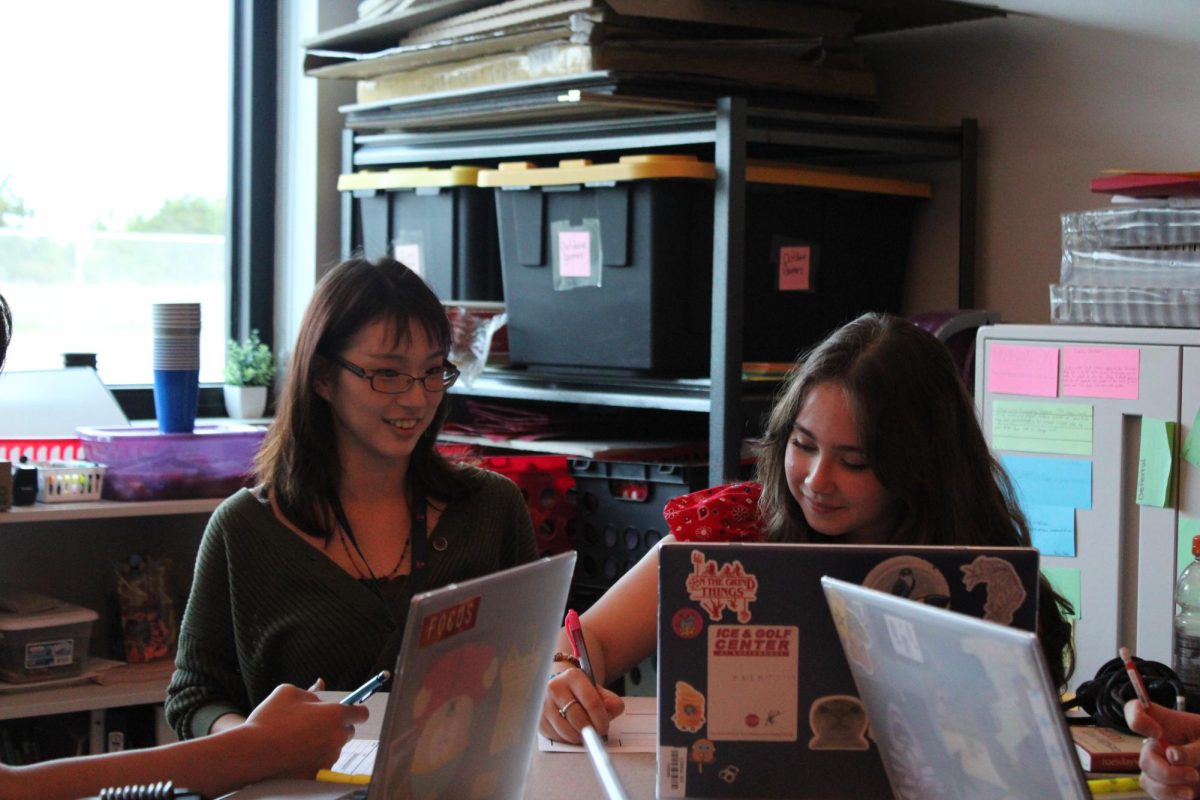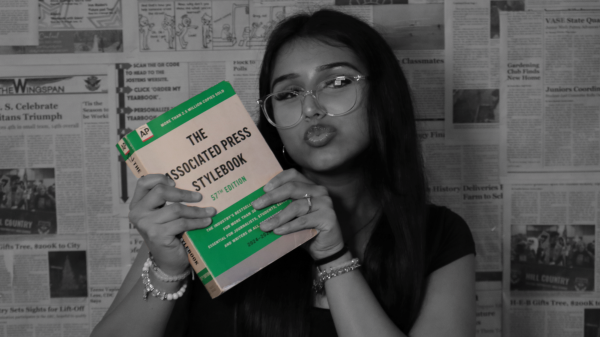

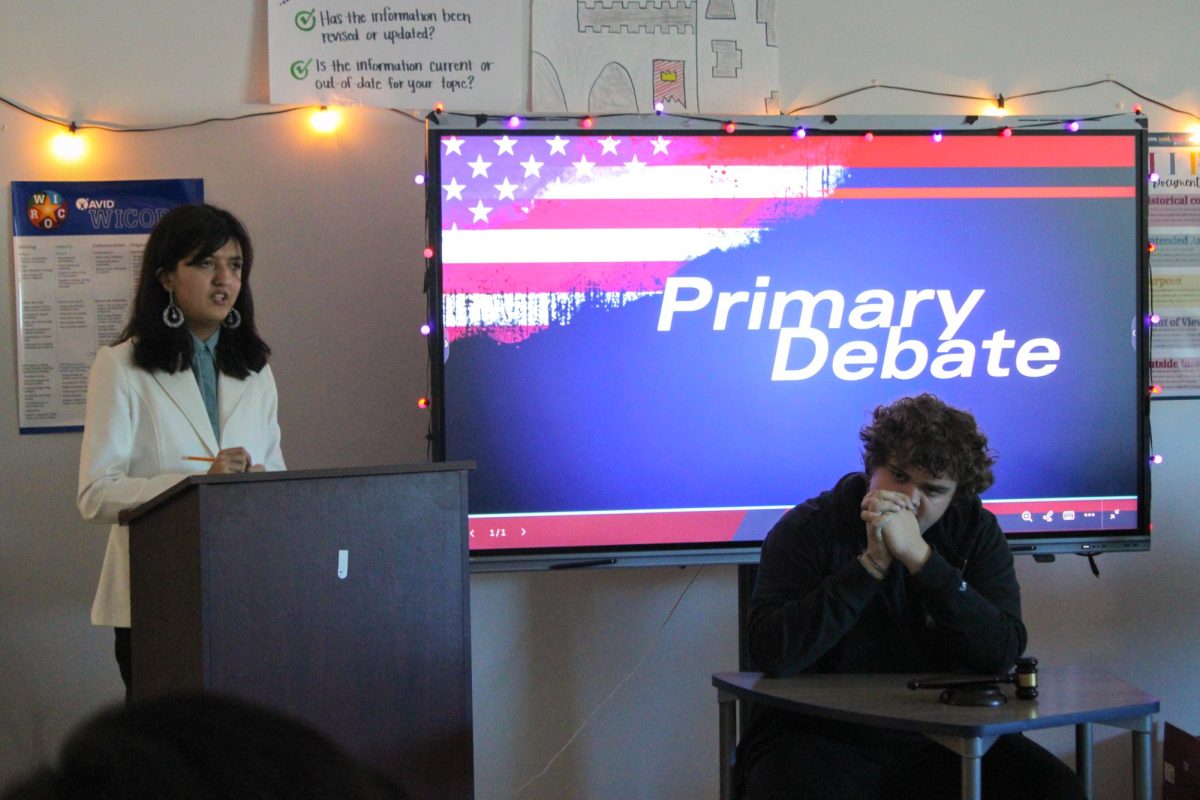
As the media frantically hurries to write about what the candidates are debating about, AP Government teacher Ms. Stephanie Ruvalcaba has to remind students that this is a fictional election for a project.
The elections project is a 2-month long project that covers units 4 and 5 of AP Government: American Political Ideologies and Beliefs and Political Participation. Students are assigned the roles of either candidates, campaign teams, interest groups, the media or political parties and simulate the process and what real world elections are like, allowing them to see different perspectives and understand how each aspect contributes to the election process overall.
“[Projects like these are important] because it puts what we learn in theory into practice,” Ruvalcaba said. “Sometimes when you put it into practice, it makes things click more.”
Students don’t only help run campaigns but are also active participants in voting who they think is the best candidate.
“Projects like these help people learn because it allows people to get more hands-on with the experience of how things like elections work, as well as other real-world scenarios,” senior Ty Fonseca said. “This particular project allows us to do more research and look at how we should handle more of the voter side of things as well as the campaign side of things.”
The project is helping students to understand how elections are like through hands-on experience. Whatever role a student has, they must do it accurately and go through the process to successfully complete their assigned tasks. Although the political parties are made up, the issues and voting process are real.
“I just didn’t realize how rigorous campaigns were,” senior Keshav Singh. “I think that campaigning is really difficult, like going out and petitioning for votes.”
AP Government also helps students understand how to vote and voter issues. It aims to teach students they should vote based on their morals and beliefs and not because one person or party is more popular than the other.
“At the end of the day, this is how our government works, and it’s important to know how your government works,” senior Aurieanah Payton said. “When you are of voting age, you can make informed decisions. ‘Vote policy, not party’ is kind of like what I think the goal of the class is. It’s trying to teach us to really think about our candidates. Think about why you’re voting and learn how the government works, so you can make that informed decision.”
The project has already had their primary elections and will have their general elections after spring break.
“I’d encourage anybody who has the ability to vote to go vote all the time because participating in our democracy is important, but I’d hope that as a result of doing this project, people in our classroom are more likely to go out and vote,” Singh said.