



Student pathways are a tricky term to describe, whether it’s just another word for a career, the foundation and plan of getting a career or a combination of both. Whether someone’s on a path to a four-year degree or going straight into a career after high school, defining and knowing how to achieve your goals early is valuable to do, and with the right tools, making these decisions is not as daunting as it may seem.
The campus is built on a pathway foundation with the aid of AVID curriculum and college level classes, which builds the skills needed to decide one’s future.
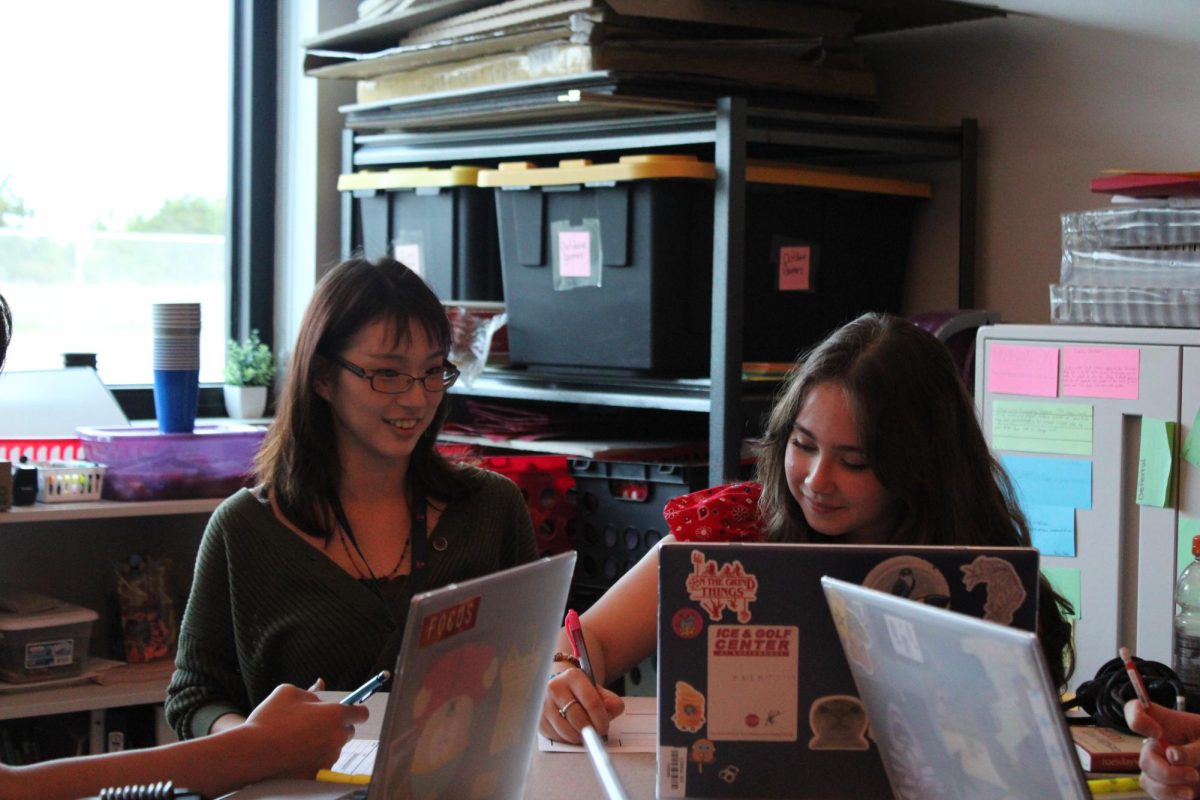
“[AVID] It gives you direction on what your post-high school path is going to be,” AVID teacher Mrs. Juanita Delgado said. “When you decide to go to college or whatever your post-high school experience is going to be, you have a layout or a plan.”
Even after only experiencing AVID for one year, students have already incorporated the skills into their life and academics.
“AVID so far has aided me a lot in deciding my pathways,” sophomore Jake Giglio said. “In freshman year, we did a project that helped us decide our career after high school and which college would best help us in going along that path. I felt like I learned so much about law in such a short time.”
While AVID is a tremendous aid when it comes to decisions like selecting a pathway, it no longer works alone in the process. With the campus’s recent partnership with Pathways in Technology Early College High schools (P-TECH), the process is much simpler, but more rigorous.
“AVID continues to be an integral piece of that [the changes],” associate principal Daniel Horton said. “This year’s freshmen will be taking up to 15 college hours next year, as a sophomore. I think it helps build the steady skills side, the how to play school side and what do I do with this once I’m done with it side.”
Along with the AVID curriculum and P-TECH, the campus works with Northeast Lakeview College, which allows students to earn a high school diploma and associate degree in a selected pathway.
“The intent of that is realistically to add opportunities for students that they might not get at another high school,” Horton said. “With college costs soaring the way they are, year after year, this is a really good opportunity for students who might not have that same opportunity to get ahead with some of those college classes, opening up access to college for students who might not get it in any other way.”
P-TECH offers a wide variety of pathways for students to select from, some including IT, Cybersecurity and Advanced Manufacturing, which is why it is not an easy decision to set a pathway and also why taking the time to look at details and ever-changing factors to truly understand the how and why of a pathway, is important.
“When given the opportunity in AVID to do career research to really start thinking and looking at all possibilities, you may think you know what you want to do—but that could change by the time you graduate,” Delgado said.
Pathways are something more than just knowing what to do after high school, it reflects character and beliefs.
“I chose engineering since it’s very performative,” sophomore Ezekiel Gibson said. “I really love doing it and AI can’t replace it, which I think makes it incredibly important.”
Student pathways are the foundation of building a life after high school. Knowing how important and what they mean to you is how you become successful.
“I personally believe that a student pathway is a path students create and follow,” Giglio said. “It determines what they want to do and experience academically and in their career to better themselves in their goals.”




Sam • Nov 3, 2025 at 4:19 pm
excellent story, 10/10