
While senior Kylie Trexler was enjoying her time in paradise, the U.S. military was undergoing an operation about 550 miles away to capture Venezuelan President Nicolás Maduro and his wife Cilia Flores. The event sparked both celebrations and protests around the world, but for Trexler, it became a nightmare.
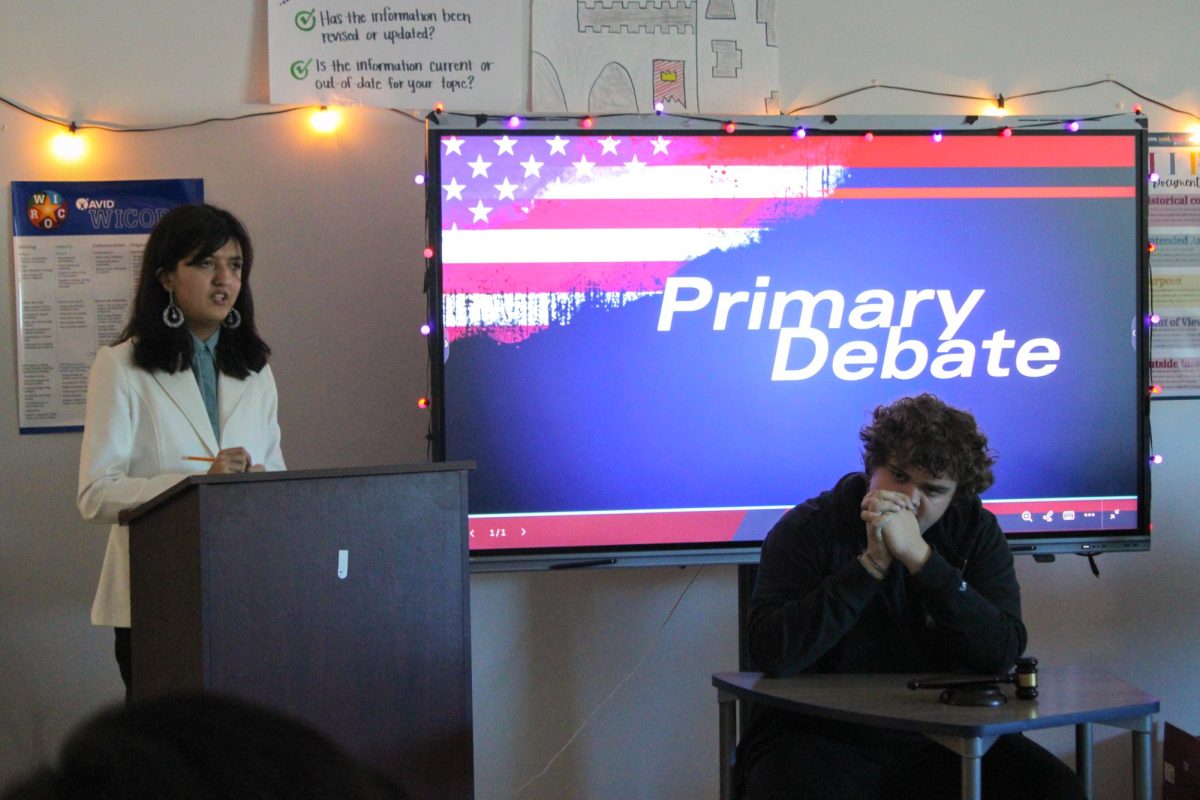
Trexler was completing the first half of her senior trip in Barbados over the Christmas break, but the four days that were supposed to be memorable and full of joy quickly took a turn for the worse: She was left stranded on the island without a flight back home. The Federal Aviation Administration prohibited U.S. aircraft from flying in southern Caribbean and Venezuelan airspace because of President Donald Trump’s capture of Maduro and strikes on Venezuela on Jan. 3. With only four days left until her Congress UIL state competition and no flight, she risked missing the opportunity of her high school debate career that she had worked so hard for.
Trexler arrived in Barbados on Dec. 29 and was set to leave on Jan. 3. On the island, she stayed at a Sandals resort, played beach volleyball, enjoyed lying and falling asleep on the beach, and took a tour of the island. On the morning of her flight back home, she and her sister packed their bags and were ready to leave for the departure lounge.
“[We decided to] go get breakfast since we were still somewhere where our food was paid for so that we wouldn’t be spending money at the airport,” Trexler said.
While they waited and ate breakfast, Trexler received a phone call from her father telling them that their plane got delayed a few hours. After opening her phone to go on TikTok, Trexler found out the real reason for her plane not arriving.
“The first video on my For You page was ‘Trump bombs Venezuela and takes their president and his wife,’” Trexler said. “I thought, ‘Oh, that would explain something,’ and then I realized we were really close to Venezuela. I opened my phone up and went on maps: We were close to Venezuela, and Venezuela’s airspace was closed. My dad called us, and he said, ‘Hey, the airspace is shut down, the airport is closing and they’re sending two flights to Europe out. No one can come in, and no one can come out. They don’t know how long it’s going to last.’”
Trexler and her family called American Airlines, Delta Air Lines and United Airlines four times a day for the three extra days she was on the island to ask if they had planes. If she didn’t have a flight by Monday, there was no way she would be able to make it to Austin in time and compete.
“I was really nervous because I know that typically there’s no considerations taken for candidates who miss their round, but I was going to beg, borrow and cry to try and get her to be able to compete,” Speech and Debate coach Mrs. Kayleigh Corres said. “[I would] even go so far as saying I will hold a computer as she’s virtual and carry her up front if that needed to be.”
Freshman Matie Vargas Juarez, who placed fourth in the regional competition, was the team’s alternative competitor for the state competition. Although it is a very rare occasion that a team’s alternative is actually used, the reality of her having to compete in place of Trexler was starting to set in with every passing day.
“I was really scared,” Vargas Juarez said. “I started prepping cases. I was also praying that Kylie made it [back in time] because she’s been doing this for so long, and she finally got the spot that she should’ve gotten last year.”
Once the FAA reopened the airspace, Trexler was finally able to board a recovery flight after days of not knowing what her fate was.
“It was a wash of relief whenever I heard that she got a flight to Miami and that the next day they were going to Austin,” Corres said. “Her parents really made sure that this went through, and I was so grateful for their support in her going to state.”
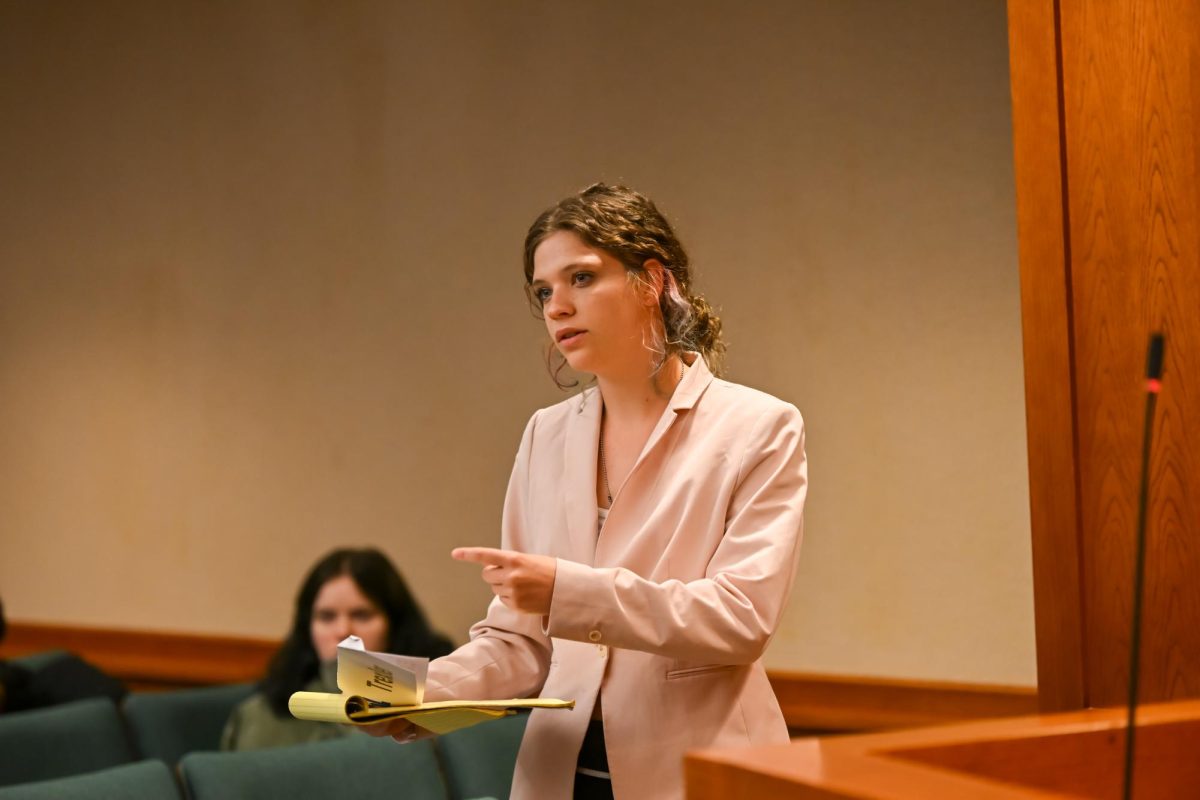
Even with Trexler’s difficult situation, she still made it through to the final round of the competition, which was held in the State Capitol, and was even posted by the UIL on their Instagram page.
“I’m really proud of her perseverance and that she was obviously and understandably very anxious about not making it back, but she held onto hope even in complete unknown circumstances with the state of the world and the state of the airline system,” Corres said. “Even through all that adversity, yes she was still very nervous, but she still held onto hope, and I think that positivity mattered in the end.”