
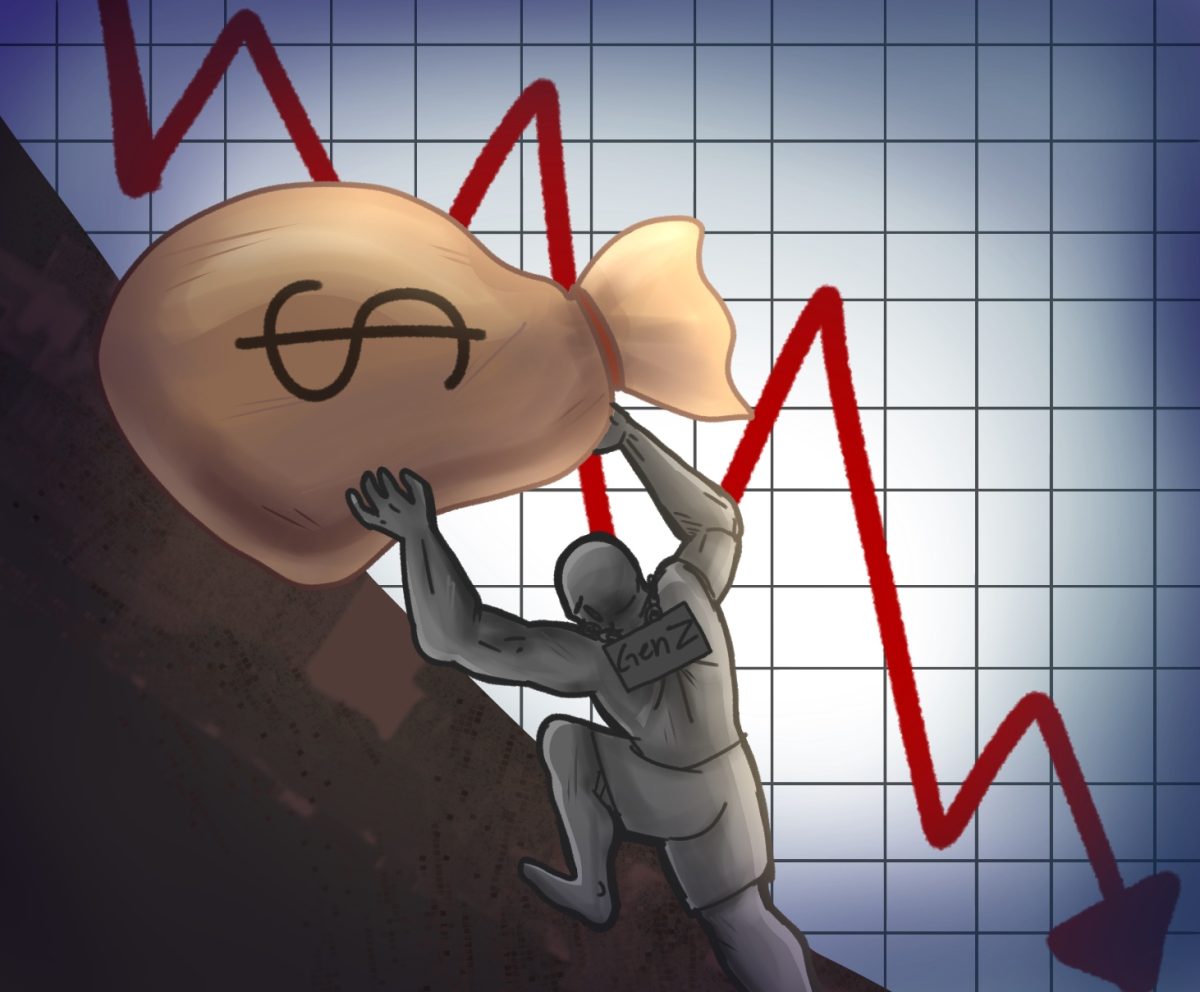
Gen Z is facing a seemingly unbeatable issue, and it’s the same one millennials have been struggling with for years. Millions of people are living paycheck-to-paycheck and struggling to afford their needs. As the last of Gen Z enters the workforce in 2029, a new contender will be joining them: Gen Alpha. The financial struggles of Gen Z and millennials are sure to hit Gen Alpha as well.
The financial struggles of the youngest generations mainly stem from overspending on non-necessities, the wealth between the younger and older generations and the weight of debt.
Compared to others, Gen Z tends to struggle with spending money on leisure and nonessential purchases. A study made by the IESE business school at the University of Navarra found that some Gen Zers spend up to 70% of their income on discretionary spending. This means they are less likely to afford what they need. A large portion of Gen Z still live in their parents’ house, and nonessential purchases make it difficult for them to gain financial independence. Even so, this doesn’t mean that Gen Z and millennials are financially irresponsible; according to a survey made by the Transamerica Center for Retirement Studies, Gen Z has been saving a median of 20% of their income for retirement savings, which is higher than any other generation before them.
Furthermore, student loan debt and other debts are hitting new graduates the hardest, and it’s getting worse every year. The Education Data Initiative reveals that the price of college has increased 148%, adjusting for inflation, from 1964 to 2026. Younger generations are also relying more and more on credit cards, racking up credit card debt and even resorting to buy now, pay later schemes to afford the necessities.
There is also a significant wealth divide between older and younger generations. The US Federal Reserve has stated that in 2025, boomers still hold more than half of the wealth in the U.S. while millennials only have 10% in comparison. On the other hand, millennials hold 40% of the debt, while boomers have half of that. This means younger generations have a lower purchasing power, lower salaries and have to grapple with more debt.
It could be argued that Gen Z and millennials are struggling with finding adequate jobs due to an insufficient work ethic. The primary reason for this misconception is a misreading of the values of these generations. What is seen as a lack of dedication is actually a prioritization of good work-life balance. Bad work conditions, bad pay and being treated with less respect has left many Gen Z and millennials feeling frustrated and weary of these work environments. Older members of the workforce are generally treated with more respect and considered to be more experienced.
There is no “silver bullet” to solve these issues, but there are many things we can do to help younger generations get a more even playing field in their life. Advocating for targeted relief programs to help eliminate debt for those weathering the worst of storms, pushing for shrinking wealth gaps and encouraging financial lessons for people who may be spending irresponsibly will help accomplish this goal. For those still in school, jumping into the real world, and having to handle finances, seems overwhelming. Luckily, there are a ton of ways to start improving your financial literacy and security. A 2025 report from Ramsey Solutions finds that only around 35% of Gen Z has taken a Personal Financial Literacy course. This means that nearly two thirds of this generation may not be well prepared for handling money. If you have the ability to take a personal financial literacy class, you absolutely should. While they are not required in Texas yet, these classes help you better understand the systems and skills behind money. If PFL is not available for you, or you just want to reinforce the skills you learned, Ramsey Solutions provides its own course called The Financial Peace University. Taking any course that teaches financial literacy will put you well on your way to financial success.
The financial habits of Gen Z and millennials are only a small part of the system that is causing millions to struggle to stay financially afloat. With proper guidance and petitioning, this trend can be reduced or reversed, finally helping people who got the short end of the stick get a fair shot.