Music styles and genres have fluctuated and changed throughout different eras, but one thing has always stayed the same: The messages or the stories behind the songs. Artists are able to express themselves in ways that they haven’t been able to in other mediums.
Even now, artists are still sending messages through song. Many people tend to believe that newer songs have more impactful messages, but others believe differently.
“I mean, there’s older artists that tell very good stories,” freshman and co-president of the music club Aislin Emerson said. “[Such as] Frank Sinatra. [Additionally] Tyler, the Creator had been in the industry for a long time. He’s not a new artist at all. He always told good stories. His unreleased tracks “Sarah” and “Rotten Sarah”. It is really good, and it tells a vivid story. I think anyone is capable of telling that story, new or old to the industry.”
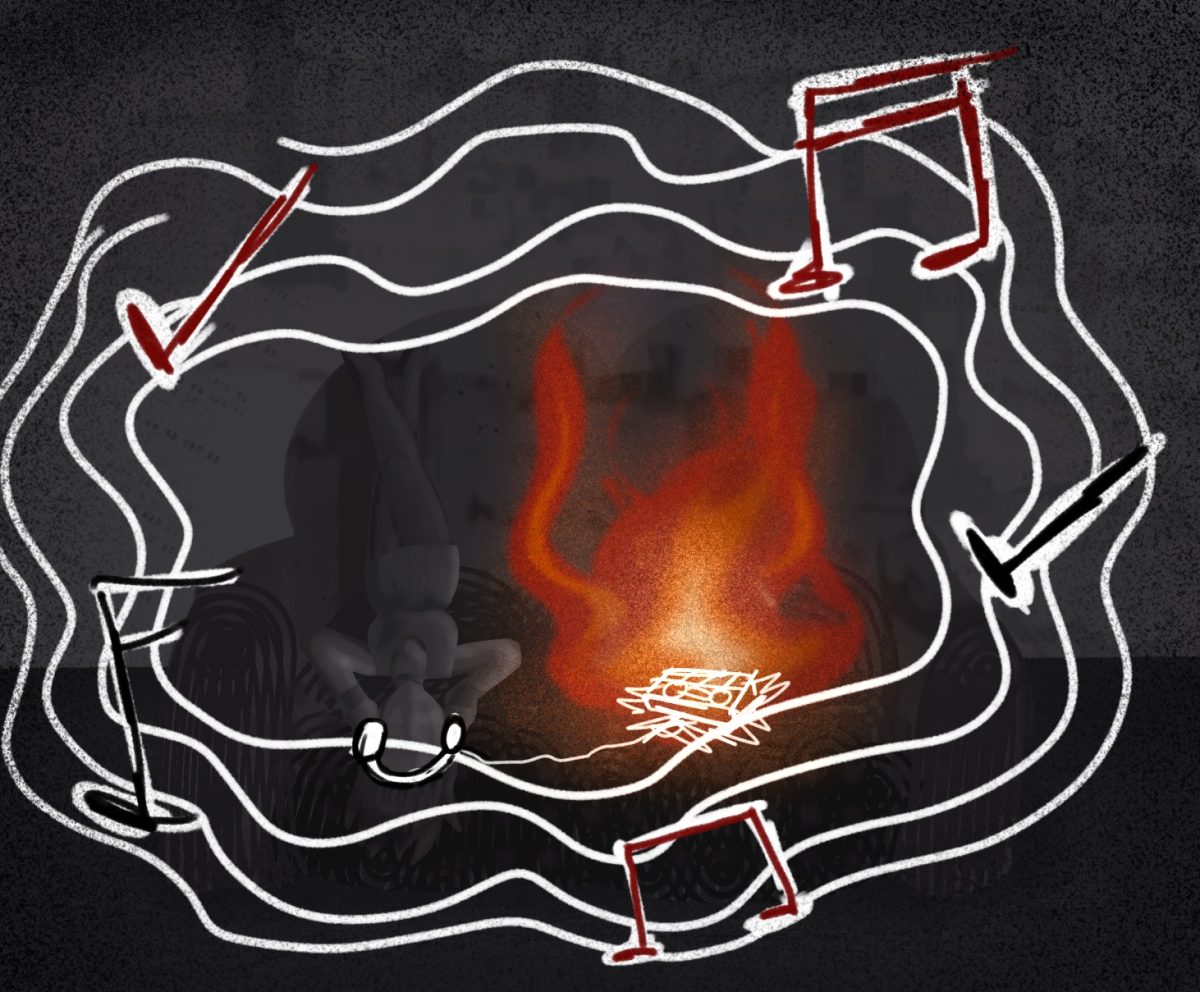
Because of the way certain songs are written and how they evoke emotion, people create a scene or image in their heads. Even if songs have official characters, people still imagine themselves or others in its place. “Mr. Brightside” by The Killers is a version of the lead singer in one of his most jealous moments. Even though the song is talking about him as a character in the moment, people imagine others in that situation when listening.
“I usually place a character in the position of our ‘Mr. Brightside’ character,” Emerson said. “I very rarely imagine the actual ‘Mr. Brightside.’ I would say I don’t know what I imagine. It depends so heavily on how I’m feeling at the time.”
Different artists tend to send messages following the same themes throughout their albums and songs. Chappell Roan is all about accepting yourself and who you are, even if who you might be is different or “weird.” Hozier focuses more on heavy themes like war or abuse, but even in his darker themes, he sprinkles in happier songs throughout his albums. Artists like Tyler, the Creator also can tell personal stories expressed through their lyrics and the way the song itself is built. He uses his album “Chromakopia” to tell the story of his fame, vulnerability and adulthood. Along with that, he explains his self-acceptance and how he shifted more towards personal growth.
“We see that a lot in things like Tyler, the Creator’s ‘Chromakopia,’” Emerson said. “As it explores his cultural exploration, his self-expression and things like that. I feel like that’s shown a lot in songs and that tells some sort of story.”
Singular songs, and not just full albums, tell great stories too. The stories are often shorter, but more obvious throughout the song. It is easier to understand due to the fact that the song follows one theme, one style, and a specific pattern to get the story out. For example, “Copacabana” by Barry Manilow is about a young woman, Lola, dancing as a showgirl who falls in love with a bartender named Tony. One day, while she was dancing, a wealthy man named Rico called her over. He took the interaction too far and Tony went to protect Lola. There was a fight between the two men, and in the end, Tony was killed. Although a complex story, it is only in one song and flows nicely between verses while painting the full picture.
“‘Copacabana’ , that tells a very clear story,” Emerson said. “There’s repetition, while the chorus is repeated, maybe altered slightly through each iteration. But generally, the tune stays the same as the story is told.”
Usually, when people think of stories in music, they think of an emotion. Oftentimes, people don’t look for the deeper meaning in the song that they are listening to.
“I think in our day and age, we have a lot of representation for a lot of groups,” Emerson said. “I think it’s the fact that people don’t pause and see what’s there. They ask for more, but they don’t look around to see what they have. They don’t look around to create something for themselves…”